- +92 316 6644789
- [email protected]
- Qanoon House, Supreme Corner, Block 18, Gulistan-e-Johar, Karachi, Pakistan

Court Marriage in Pakistan: Procedure, Requirements, Documents & Fees
Trusted Court Marriage in Pakistan by Senior Family Advocates
We offer accurate and quick court marriage service in Pakistan: our lawyers check age and documents, arrange the Nikah with an authorised Nikah Registrar, complete the Nikah Nama and register your marriage on time with the Union Council for a computerised marriage certificate.
✓ Our fee quoted in writing after document check · ✓ For adult couples, overseas Pakistanis and foreign nationals · ✓ Nikah, Nikah Nama, registration and certificate included · ✓ Office 1 — DHA Phase 7, Karachi · Office 2 — Gulistan-e-Jauhar, Karachi
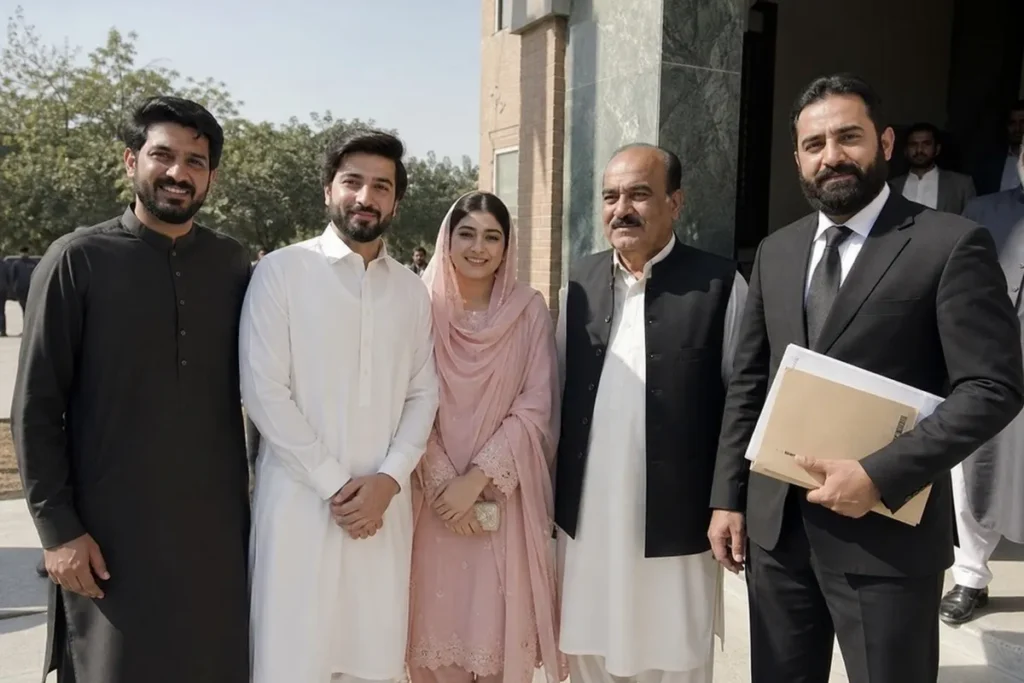
Accurate and Quick Court Marriage in Pakistan With Senior Lawyer-Led Service
Executive Summary — Our Trusted Court Marriage Service in Pakistan
Executive Summary — Court Marriage in Pakistan. Court marriage in Pakistan is a lawful free-will marriage: two adults marry by their own consent, the Nikah is solemnised by an authorised Nikah Registrar, and the marriage is registered with the Union Council. A judge does not solemnise it. Sindh, Punjab and Islamabad now set 18 years as the minimum marriage age for both men and women.
Who needs it: adult couples marrying by choice, overseas Pakistanis, foreign nationals and divorced or widowed persons who want a correct, registered court marriage. What we do: document and age check, free-will affidavit where useful, Nikah arrangement, Nikah Nama, Union Council registration and computerised marriage certificate. Cost: no single fixed government fee; our fee is quoted in writing after we see your documents and city. Time: the Nikah can often be arranged quickly once documents are complete; registration and certificate timing depends on the Union Council.
How to start your court marriage in Pakistan: send both CNICs, your city and any divorce or Khula papers on WhatsApp +92 316 6644789 (24 hours, 7 days). Calls 10 am – 10 pm: Karachi +92 331 6644789 · Lahore +92 333 1127835 · Islamabad +92 333 1127836 · Rawalpindi +92 333 1127831. Qanoon House advocates have practised since 1985.
Office 1 — DHA Phase 7, Karachi · Office 2 — Gulistan-e-Jauhar, Karachi · Nationwide court marriage assistance · Updated on 4 November 2026
What “Court Marriage” Means in Pakistan
Court Marriage Lawyers, Nikah Registration and Legal Documentation in Pakistan
Yes. Court marriage is legal in Pakistan when the parties meet the applicable legal age and capacity requirements, marry with free consent, complete the valid Nikah or other applicable marriage formalities, and register the marriage as required by law. In everyday Pakistani usage, court marriage usually means a free-will marriage arranged with legal and documentary assistance. For Muslim parties, the marriage itself remains a Nikah; a judge does not have to solemnise it merely because the process is commonly called a court marriage.
Nikah Nama and Marriage Records
A lawful case normally involves checking legal capacity and age under the law applicable to the parties and location, confirming free consent, arranging witnesses, solemnising the Nikah through an authorised Nikah Registrar or Nikah Khawan where applicable, completing the Nikah Nama and securing the required official registration. A judge does not ordinarily need to solemnise a Muslim Nikah simply because people call the process a “court marriage”.
Important:
Why Couples Choose Our Court Marriage Lawyers in Pakistan
40+ Years of Professional Experience
The wider Qanoon Group professional legal and corporate taxation practice dates from 1985. Qanoon House builds on that experience through a nationwide network of affiliated lawyers and legal professionals.
Local Jurisdiction
Marriage documentation should be handled through the competent Nikah Registrar, Union Council or other authority for the relevant locality. Local practice matters, particularly for registration and certificates.
Document-First Approach
Identity, age, marital status and prior-marriage documents are checked before promises are made. Foreign-national and post-divorce cases require additional review.
Court Marriage Procedure in Pakistan
The exact sequence depends on the facts, but a properly handled Muslim court-marriage matter commonly follows these stages:
Eligibility and Identity Review
CNICs, passports or other identity records are reviewed. Age, marital status, nationality, prior marriage and any case-specific issue should be identified before arranging the Nikah.
Free Consent and Case Assessment
Both parties must be acting voluntarily. Where family opposition, threats, missing-person allegations or a disputed age may create legal risk, the issue should be assessed before the ceremony rather than after it.
Documents and Witnesses
The required identity records, photographs, witnesses and any divorce, Khula, death, foreign-national or power-of-attorney documents are prepared according to the case.
Nikah Solemnisation
The Nikah is solemnised in accordance with the applicable personal law. For Muslim marriages, the Nikah Nama records the parties, witnesses, dower and other prescribed particulars.
Registration and Official Record
The marriage record is submitted through the competent registration channel. The Nikah Nama and subsequent computerised or official marriage record should be checked for names, CNIC numbers, dates and other details before international or official use.
Documents Required for Court Marriage
Common Documents
| No. | Checklist Item |
|---|---|
| 1 | Original CNIC or other lawful identity document |
| 2 | Copies of identity documents |
| 3 | Recent photographs where required |
| 4 | Two witnesses and their identification where applicable |
| 5 | Information required for the Nikah Nama |
| 6 | Age evidence where identity records do not resolve the issue |
Additional Documents in Special Cases
| No. | Checklist Item |
|---|---|
| 1 | Divorce deed, Union Council record or Khula/decree documents |
| 2 | Death certificate where a previous spouse has died |
| 3 | Passport and valid immigration/identity documents for foreign nationals |
| 4 | Marital-status or consular documents where the case requires them |
| 5 | Proper power of attorney where legally relevant |
| 6 | Translations, attestations or verification for foreign-issued records |
Document Review and Identity Checks
Requirements should be checked against the actual case. There is no responsible one-document-list answer for every foreign-national, divorced, widowed or overseas case. See Documents Required for Court Marriage in Pakistan.
Age, Consent and Family Permission
Age and consent are separate legal questions. The parties must meet the minimum marriage-age requirements applicable to their case, and the marriage must be voluntary. Because marriage-age legislation has developed differently across Pakistan, current provincial or territorial law should be checked before proceeding.
Adult Choice and Court Marriage in Pakistan
For an adult Muslim woman with legal capacity, superior-court jurisprudence recognises the significance of her free choice in marriage. However, a website summary cannot safely resolve a disputed-age case, a forged-document allegation or a matter involving coercion. Those facts require individual legal review.
For more detail, read Adult Woman’s Right to Marry by Choice and Court Marriage Without Parents’ Consent.
Court Marriage Registration and Marriage Certificate
Solemnising a Nikah and creating the official registration record are related but distinct steps. The prescribed Nikah Nama should be completed accurately and the marriage should be registered through the competent local authority under the applicable law and rules. Errors in spelling, CNIC numbers, dates or marital-status details can later affect immigration, inheritance, family registration and other official matters.
NADRA Marriage Certificate After Your Nikah
The expression “NADRA marriage certificate” is commonly used for the computerised marriage certificate or record generated after local registration. The exact issuing authority and procedure should be confirmed for the relevant jurisdiction. For detailed guidance see Court Marriage Registration in Pakistan and Marriage Certificate After Court Marriage.

Court Marriage Fees in Pakistan
There is no single lawful professional fee that applies to every court-marriage case. Total cost may vary according to the city, lawyer or professional engaged, documentation required, registrar and registration charges, foreign-national documents, translations, attestations, protection proceedings or urgent case handling.
What Our Court Marriage Fee in Pakistan Covers
Before engaging a service provider, ask what is included: legal consultation, affidavits, Nikah solemnisation, Nikah Nama, registration, certificate assistance, transport, photographs, witnesses if lawfully arranged, and any post-marriage documentation. A clear written scope helps avoid misunderstandings.
Court Marriage Assistance by City
Karachi
Procedure, documents, registration and protection issues under the law and local practice applicable in Sindh.
Lahore
Punjab-specific age, Nikah, documentation, registration and legal-protection guidance.
Islamabad
ICT-specific procedure and registration guidance, including the current legal age and local documentation process.
Rawalpindi
Punjab law applies in Rawalpindi even though it forms part of the twin-city region with Islamabad.
Foreign Nationals, Overseas Parties and International Use
Cases involving a foreign national require more than simply copying the ordinary CNIC checklist. Passport and immigration status, marital-status evidence, embassy or consular documentation where applicable, translation and attestation requirements, and the intended country of use should be reviewed before the Nikah. An embassy NOC is not a universal requirement in every case; the correct documents depend on nationality, marital status, destination and local registration practice.
For details see Court Marriage for Foreign Nationals and Pakistani–Foreigner Court Marriage.
Second Marriage, Divorce, Khula and Remarriage
A second marriage should not be treated as an ordinary first-marriage file. Section 6 of the Muslim Family Laws Ordinance, 1961 creates a separate regulatory framework concerning another marriage during the subsistence of an existing Muslim marriage. The facts and documentation should be reviewed before proceeding.
Remarriage Checks Before a New Nikah
Where a party was previously divorced or obtained Khula, the effectiveness and documentary proof of the earlier dissolution should be checked. The timing of remarriage can also raise iddat and record issues depending on the circumstances. See Second Marriage and Court Marriage and Remarriage After Divorce or Khula.
Protection After a Free-Will Marriage
Some adult couples face threats, harassment, unlawful confinement, false allegations or pressure after marrying by choice. Legal response depends on the facts. A lawyer may advise preservation of identity and marriage records, a written police complaint, representation before the appropriate authority, or court proceedings where lawful protection is required.
Protection Remedies Are Fact-Specific
Protection proceedings should not be presented as an automatic or decorative part of every court marriage. They are fact-specific remedies. Read Police Protection After Court Marriage, Protection Petition After Court Marriage and Habeas Corpus and Adult Choice.
Online Nikah vs Court Marriage
Online Nikah and court marriage are not interchangeable labels. “Court marriage” usually describes a free-will marriage handled with legal/documentary assistance, often with both parties physically available. Online Nikah concerns remote participation and may require carefully prepared authority, identity verification, witnesses and registration arrangements. The validity and procedure depend on how the Nikah is conducted and documented.
More Court Marriage Legal Guides
Procedure & Documentation
Rights & Protection
Special Situations
Need Court Marriage Legal Assistance?
Send your city, ages, nationality, present marital status and any prior divorce/Khula documents. Do not send passwords, banking PINs or unrelated confidential credentials.
Frequently Asked Questions About Court Marriage in Pakistan

Is court marriage legal in Pakistan?
Yes. Court marriage in Pakistan is legal when both parties are of legal age, consent freely, complete a valid Nikah and register the marriage with the Union Council. For Muslims the marriage itself is the Nikah; “court marriage” is the common name for this free-will process.
Does a judge perform the court marriage?
No. The Nikah is solemnised by an authorised Nikah Registrar or Nikah Khawan. Court proceedings arise only separately, for example a protection petition or habeas corpus where a couple faces threats or illegal detention.
What is the minimum age for court marriage in Pakistan?
In Sindh (Karachi) the minimum age is 18 for both sexes under the Sindh Child Marriage Restraint Act, 2013. Islamabad set 18 for both under its 2025 Act, and the Punjab Assembly passed the Punjab Child Marriage Restraint Act, 2026 setting 18 for both, which covers Lahore and Rawalpindi.
Do parents have to consent to an adult woman’s marriage?
Pakistani superior courts recognise an adult Muslim woman’s right to marry by her own free choice. Parental consent is not a legal condition for two adults, but age, identity and any coercion allegation must be checked on the actual facts.
What documents are needed for court marriage in Pakistan?
Original CNICs and copies of both parties, photographs, two adult witnesses with CNICs, Nikah Nama particulars and, where relevant, divorce, Khula, death or foreign-national documents. We check the full list against your case before the Nikah.
Can court marriage be completed the same day?
The Nikah can often be arranged on the same day when documents and eligibility are clear. Union Council registration and the computerised marriage certificate follow afterwards, and their timing depends on the local authority.
Is a free-will affidavit enough to prove marriage?
No. An affidavit can record consent, but it does not replace the Nikah, the Nikah Nama, age and identity evidence or Union Council registration.
Can a foreign national have a court marriage in Pakistan?
Yes, subject to passport and visa status, marital-status evidence, local registration requirements and any attestation the destination country needs. An embassy NOC is not a universal requirement; it depends on nationality.
Can a married man use court marriage to avoid second-marriage rules?
No. Section 6 of the Muslim Family Laws Ordinance, 1961 still requires prior written permission of the Arbitration Council for another marriage while an existing marriage subsists.
Do you offer court marriage service outside Karachi?
Yes. We offer court marriage service in Karachi, Lahore, Islamabad and Rawalpindi through our nationwide network. WhatsApp +92 316 6644789 to start, and our team will route your file to the right city.
Speak to Qanoon House About Your Matter
Updated on 4 November 2026 · Reviewed by Mohsin Ali Shah, Advocate High Court · Published by Qanoon House. Legal advice depends on the documents, applicable law and facts of the matter.
Creation: DIGITOCRATE – Promotion: SEO CONTENT MASTER