- +92 316 6644789
- [email protected]
- Qanoon House, Supreme Corner, Block 18, Gulistan-e-Johar, Karachi, Pakistan

Legal Rights After Court Marriage in Pakistan | Registration, Proof, Dower & Protection
We Offer Accurate and Quick Legal Help After Court Marriage in Pakistan
We offer accurate and quick post-marriage legal service: we check and register your Nikah Nama, obtain the NADRA marriage certificate, protect dower and maintenance rights, and act on threats, FIRs or protection petitions after a free-will court marriage anywhere in Pakistan.
- ✔ Free 15-minute consultation; our fee quoted in writing
- ✔ For married adult couples and overseas spouses
- ✔ Registration, certificate, protection and family-court help
- ✔ Advocate-led since 1985
Office 1 — DHA Phase 7, Karachi · +92 331 6644789 · Office 2 — Gulistan-e-Jauhar, Karachi · +92 316 6644789 · Calls 10 am – 10 pm · WhatsApp 24/7
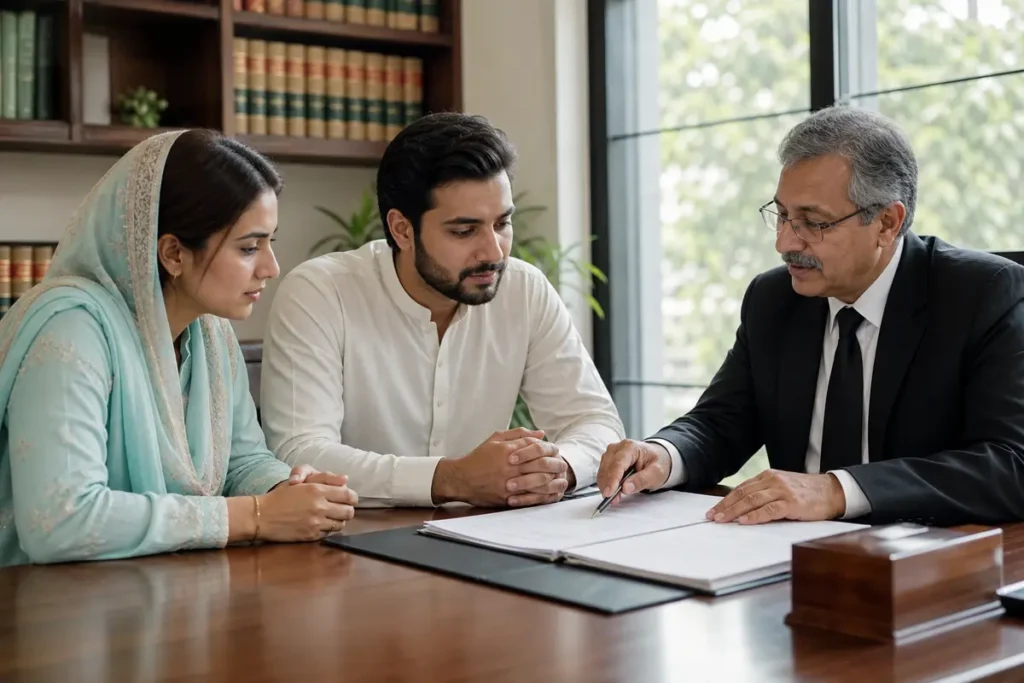
Executive Summary: Legal Rights After Court Marriage in Pakistan
What Couples Need After a Court Marriage and How Our Senior Family Lawyers Help
Updated on 9 November 2026. Legal rights after court marriage in Pakistan are the same as in any valid marriage: registration of the Nikah under section 5 of the Muslim Family Laws Ordinance, 1961, documentary proof, dower, maintenance, inheritance and protection of an adult spouse’s free choice. Qanoon House, advocate-led since 1985, helps couples secure each of these rights.
Who Needs Help With Legal Rights After Court Marriage
Couples need our service when the Nikah Nama is not yet registered or contains errors, when a NADRA marriage certificate is required for travel or immigration, when relatives threaten or file an FIR, or when dower, maintenance or inheritance is later disputed by family members.
Our Fee, Timing and How to Start
The first 15 minutes of consultation are free; our fee is then quoted in writing after we check your documents, and official charges are separate. Registration and certificate follow-up usually take days, not months. Send your Nikah Nama and CNICs on WhatsApp to Office 1 — DHA Phase 7, Karachi (+92 331 6644789) or Office 2 — Gulistan-e-Jauhar, Karachi (+92 316 6644789).
Related Court Marriage Guides
This guide explains the principal legal rights and practical steps that can arise after court marriage in Pakistan. For the marriage process itself, see Court Marriage in Pakistan. For all related topics, use the Court Marriage Legal Guides hub.
1. Right to Have the Marriage Properly Registered
For Muslim marriages, section 5 of the Muslim Family Laws Ordinance, 1961 requires registration. The Nikah Nama, Nikah Registrar’s record and the relevant local authority’s registration record are therefore central documents after court marriage.
Checking the Nikah Nama Entries Before Registration
A couple should check spellings, CNIC numbers, dates, dower terms and marital-status entries before accepting the completed record. Errors discovered later may require a correction process. See Court Marriage Registration in Pakistan.
2. Right to Obtain Documentary Proof of Marriage
The registered Nikah Nama is primary evidence of the Muslim marriage transaction and registration record. Couples may also require a computerised marriage registration certificate for official, immigration, banking, family-record or foreign-use purposes.
The computerised certificate does not replace the underlying Nikah and registration process. Read Marriage Certificate After Court Marriage for the current documentation route.
3. Rights Created by the Nikah Nama
The Nikah Nama is not merely a ceremonial form. It records important contractual and legal terms, including the amount and nature of haq mehr or dower and any lawful special conditions agreed by the parties. Those terms should be completed carefully at the time of marriage because disputes frequently arise from blank, unclear or incorrectly completed columns.
Where enforcement is required, the legal forum and remedy depend on the nature of the claim and the applicable family law.
4. Dower Rights After Court Marriage
A wife’s right to dower arises from the marriage contract. Whether dower is prompt, deferred, partly paid or otherwise structured should be clear from the Nikah Nama and surrounding evidence. If a dispute develops, the written Nikah record becomes especially important.
The fact that the marriage was described socially as a “court marriage” does not reduce or remove dower rights.
5. Maintenance and Financial Rights
Marriage may create enforceable financial obligations between spouses under Pakistani Muslim family law. Maintenance claims are fact-sensitive and can depend on the circumstances of the marriage, conduct of the parties, separation and other evidence. A court-marriage label does not create a weaker category of marriage.
Where maintenance, dower or other matrimonial claims arise, the registered marriage record and the Nikah Nama usually form part of the essential evidence.
6. Inheritance and Marital Status
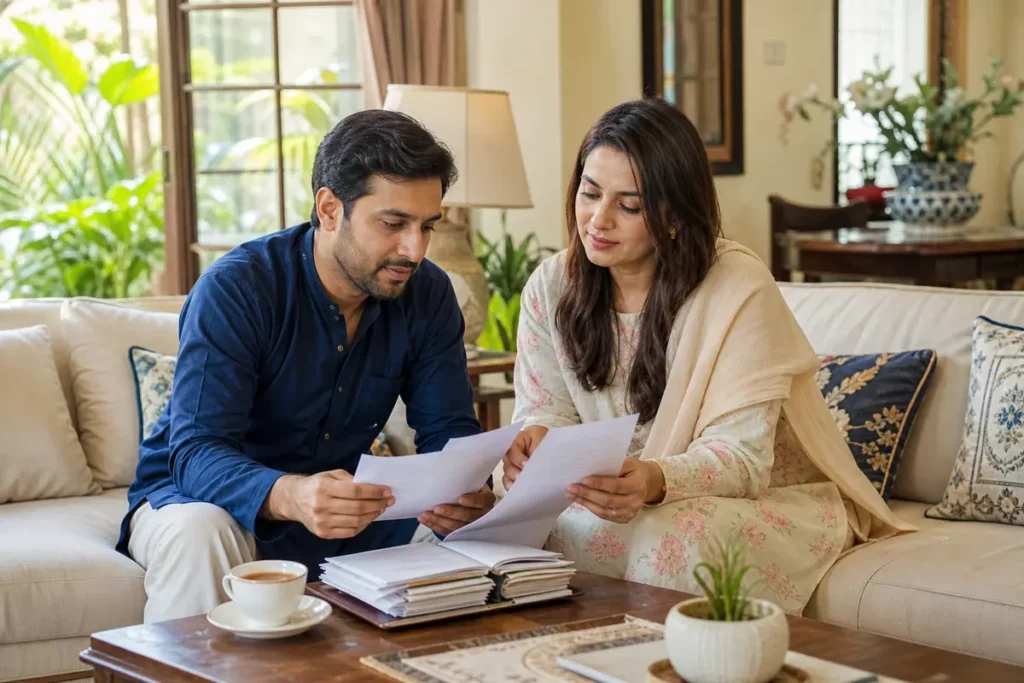
A legally valid marriage can affect succession and inheritance rights under the applicable personal law. Proper documentation becomes especially important when a spouse dies and marital status is later disputed by other family members.
Couples should therefore preserve certified or official marriage records rather than relying only on photographs, private affidavits or informal copies.
7. Protection From Threats or Harassment
Most adult couples do not require police or court protection after marriage. However, where there are genuine threats, coercion, unlawful confinement, harassment or attempts to interfere with an adult spouse’s liberty, legal remedies may be available.
Evidence That Supports a Protection Request
Evidence matters. Threat messages, call records, written complaints, medical evidence, witness information and copies of the marriage documents may become relevant. See Family Threats After Court Marriage and Protection Petition After Court Marriage.
8. Right of an Adult Woman to Make Her Own Choice
Pakistani superior-court authority recognises the legal capacity of an adult, sui juris Muslim woman to contract a marriage of her own free will. Where a dispute is raised after marriage, her age, identity, capacity and voluntary statement can become central factual issues.
This principle applies to an adult and cannot be used to avoid child-marriage legislation. See Can an Adult Woman Marry by Choice?.
9. Habeas Corpus and Unlawful Confinement Issues
Where an adult spouse is allegedly being unlawfully detained or prevented from exercising personal liberty, habeas corpus-type proceedings may arise. Such cases are highly fact-sensitive. The court may need to determine age, identity, voluntariness and whether any person is being illegally confined.
Read Court Marriage and Habeas Corpus in Pakistan for the specific legal context.
10. What If an FIR Is Registered After the Marriage?
Family opposition can sometimes lead to criminal allegations after a free-will marriage. A marriage certificate or affidavit does not automatically dispose of every criminal allegation. The allegations, ages, statements, documentary evidence and procedural stage of the case must be examined separately.
Where an FIR exists, the couple should obtain criminal-law advice promptly rather than assuming that marriage documents alone will resolve the matter.
11. Second-Marriage Consequences
If a Muslim man contracts another marriage while an existing marriage subsists, section 6 of the Muslim Family Laws Ordinance must be considered. Calling the later marriage a court marriage does not remove the statutory Arbitration Council requirements or the consequences of non-compliance.
12. Rights Where One Spouse Is a Foreign National
Where one spouse is foreign, post-marriage documentation may involve certified copies, translation, attestation, diplomatic or consular requirements and use of the marriage record for immigration or residence purposes. The exact requirements depend on the destination country and the authority before which the document will be produced.
13. Record Corrections After Court Marriage

Names, CNIC numbers, dates and other particulars should be checked before the marriage record is finalised. If a mistake is discovered later, the correction method depends on the nature of the error, the record involved and the issuing authority.
Keeping the Nikah Nama and NADRA Records Consistent
Avoid creating inconsistent documents. The Nikah Nama, local registration record, computerised certificate and identity documents should match as far as the law and underlying facts require.
14. What Happens If the Marriage Later Breaks Down?
A court marriage is not subject to a special divorce system. Dissolution, talaq, khula and related family claims are governed by the applicable family law in the same way as other legally valid marriages. The fact that the couple married by free choice does not deprive either spouse of lawful matrimonial remedies.
If either spouse has previously been divorced and plans to remarry, see Court Marriage After Divorce or Khula.
15. Preserve the Evidence of Marriage
After court marriage, both spouses should keep secure copies of the Nikah Nama, registration record, computerised certificate, identity documents and any relevant affidavits or court orders. Where family hostility exists, secure digital copies can be particularly useful.
Do not rely only on WhatsApp photographs of documents when certified or official records are available.
Frequently Asked Questions on Legal Rights After Court Marriage
Does court marriage give fewer rights than a family-arranged marriage?
No. The legal consequences depend on whether the marriage is valid under the applicable law, not on whether the couple chose each other or their families arranged the match.
Is the Nikah Nama important after marriage?
Yes. It records the marriage and important contractual terms, including dower and any lawful special conditions entered in the form.
Can a couple seek protection after court marriage?
Where there are genuine threats, harassment or unlawful interference with liberty, police or court remedies may be available depending on the facts.
Does a marriage certificate automatically cancel an FIR?
No. Criminal allegations must be addressed according to their facts and procedural stage. Marriage documents may be relevant evidence but do not automatically dispose of every criminal case.
Can court-marriage spouses later seek divorce or khula?
Yes. The ordinary family-law remedies applicable to the marriage remain available.
Is registration of a court marriage compulsory in Pakistan?
Yes. For Muslim marriages, section 5 of the Muslim Family Laws Ordinance, 1961 requires registration through the Nikah Registrar. Failure to register is a punishable offence, but it does not by itself make a valid Nikah void.
How do we get a NADRA marriage certificate after court marriage?
Once the Nikah Nama is entered in the Union Council record, the computerised marriage registration certificate can be issued through the Union Council and NADRA system. We check the entries and follow up for you.
Does a court marriage affect the wife’s right to dower?
No. Dower (haq mehr) arises from the marriage contract recorded in the Nikah Nama. Calling the marriage a court marriage does not reduce or remove the wife’s right to dower.
Can a wife claim maintenance after a court marriage?
Yes. A wife in a valid marriage can claim maintenance in the Family Court under the West Pakistan Family Courts Act, 1964, in the same way as in a family-arranged marriage.
Does a court-marriage spouse inherit from the other spouse?
Yes. A lawful spouse is an heir under Muslim personal law. Proof of the marriage, especially the registered Nikah Nama and certificate, becomes important if other heirs dispute the marriage.
What can we do if family members threaten us after marriage?
Preserve the evidence, report to the police and, where the police do not act, apply to the Justice of Peace under sections 22-A and 22-B of the Code of Criminal Procedure or seek protection from the High Court.
Can overseas spouses use the court marriage certificate abroad?
Usually yes, after attestation by the Ministry of Foreign Affairs and any embassy or translation requirements of the destination country. Requirements differ from country to country.
How much does legal help after court marriage cost?
The first 15 minutes of consultation are free. Our professional fee is then quoted in writing after we check your documents; Union Council, NADRA and attestation charges are separate.
Related: Browse all Court Marriage Legal Guides.
Related Legal Services and Guidance
- Court Marriage in Pakistan: Procedure, Requirements, Documents & Fees
- Online Nikah in Pakistan – Vakalat, Nikah Nama & Marriage Registration
- NADRA Certificates in Pakistan | Marriage, Divorce, Birth & Death
- Court Marriage Legal Guides in Pakistan | Qanoon House
- Contact Qanoon House | Legal Services & Franchise Enquiries in Pakistan
Speak to Our Lawyers About Your Legal Rights After Court Marriage
Updated on 9 November 2026 · Reviewed by Mohsin Ali Shah, Advocate High Court, practising since 1985. Legal advice depends on the documents, applicable law and facts of the matter.
Creation: DIGITOCRATE – Promotion: SEO CONTENT MASTER